
Contents
- Why is the first board position the hardest to land?
- Understand the role of the board
- Take stock of your skills
- Add training credentials to your board CV
- Test your skills in practice
- Networking is key to your board career
- FAQ
Why is the first board seat the hardest to secure?
A lack of board experience is the most commonly cited barrier to securing your first board seat. Without a proven track record, it can be hard to convince a company you are ready for the responsibility.
A board’s primary duty is the overall and strategic management of the company, so boards look for members who understand both business strategy and risk management.
Even with a short CV, a board programme and its network can strengthen your chances of securing that first seat. You will cover the responsibilities, financial oversight and strategic role of the board.
We’d be delighted to meet you on the Board Certificate programme — but first, this page will help you prepare for a career in the boardroom.

Frederik M. Braun
Director, Microsoft
ABOUT BOARD CERTIFICATE
“Good, professional and well organized education, where the teachers had a very high level. A strong foundation for any board member.“
Understand the role of the board
As a board member, you are not responsible for day-to-day operations, but for the overall and strategic management of the company. Together with the other board members, you set direction for the organisation and ensure the executive team has the right framework to succeed.
Board work is not only about strategy and business goals — it is also about overseeing risk, finance and governance. As a board member, you act as a sounding board to the executive team and are instrumental in decisions that can shape the company’s future.
Take stock of your skills
Before pursuing your first board seat, map out your skills profile. Identify the management and business experience you bring, and think broadly. Just as a board needs financial and legal expertise, it often needs knowledge of digitalisation, ESG, strategy, communications or sector insight.
Your profile should also document the results you have delivered. Measurable numbers and clear cases carry the most weight with people who do not know you personally.
Once you have pinpointed your strengths, it becomes easier to see where you may need to build further knowledge — for example through a board programme, which places your skills in a boardroom context.
Learn more about board training
Our three-day programme brings you the latest trends and developments in board governance. You will expand your network and be challenged by our experienced facilitators — preparing you for the next step in your board career.
At Board Company, we have trained more than 10,000 board members and senior executives across Europe. Interested in learning more? Fill in our contact form and we’ll be in touch.
Receive information about Board Certificate
Information will be sent via Email
Add training credentials to your board CV
A board CV is not an ordinary résumé. It should clearly highlight your strategic skills, achievements and ability to think at corporate level.
Focus on:
- Your leadership, change and growth experience
- Collaboration with senior management and, where relevant, prior board experience
- Proven achievements — ideally in numbers and specific cases
- Certifications, degrees and programmes
A strong board CV shows how you can contribute to the development of the company — not simply how you have handled day-to-day tasks.
Test your skills in practice
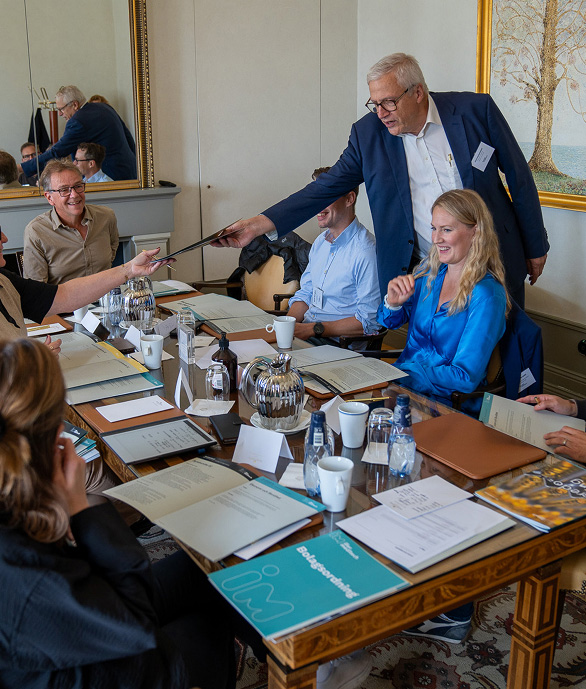
During the three-day programme, you will be taught by experienced professionals who bring insight from long board careers and from executive roles where they have felt the direct impact of board decisions.
Across the three days, you will be updated on the latest trends and developments in the field and gain an international perspective. The programme concludes with a unique opportunity to put your skills as a board member into practice.
The Board Game
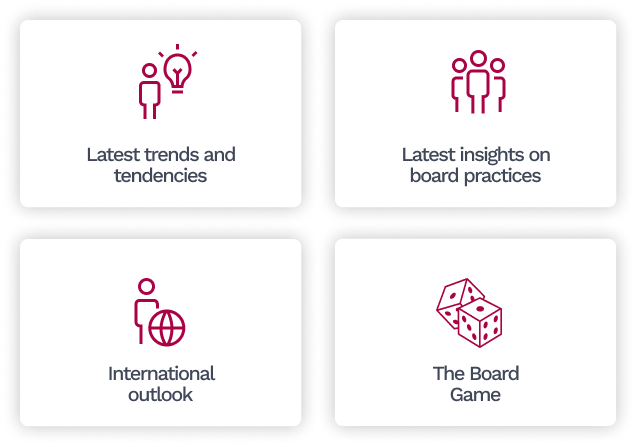
The Board Game is a simulation in which you face realistic boardroom scenarios under pressure. It gives you a clearer sense of how you perform as a board member in practice. Knowing your strengths and weaknesses before you take a seat allows you to act decisively — for the benefit of the company you are governing.
Networking is key to your board career
Most board appointments are never advertised. They are made through networking. It pays to:
- Map your relationships and connections (lawyers, accountants, senior executives and officers in your sector)
- Participate in relevant networks and events
- Prepare a sharp elevator pitch that clearly explains what you bring
You need to be able to explain to your network why you will be an asset to a board. Our programme gives you the knowledge and language to do exactly that.
You will also have the opportunity to join the Board Forum, our exclusive network for alumni of the programme. The Board Forum is facilitated in collaboration with Chicago Booth alongside a selection of leading European businesses.
The Forum supports your continuing development and gives you the expanded network a newly appointed board member needs.
The path to becoming a board member – step by step
There is no single route to a first board seat, but the following steps will help pave the way.
- Take stock of your skills
What can you bring to the table? Where do you need to develop? - Write a board CV
Highlight achievements, strategic experience and relevant training. - Build your knowledge
Enrol in a board programme such as the Board Certificate, participate in forums, and seek hands-on experience — the latter through our Board Game. - Use your network actively
Most appointments are never advertised — so seek out the people you can learn from, benefit from or develop with.
FAQ
Why should I enrol in a board programme through Board Company?
Board Company is one of Europe’s most experienced providers of board training, having trained over 10,000 board members worldwide — including through our London-based executive programme at Chicago Booth. With the Board Certificate you don’t just get a theoretical overview — you are taught by seasoned board members and relevant professionals, and you gain hands-on experience through our recognised simulation, The Board Game.
The programme gives you:
- A deep understanding of the role, responsibilities and strategic remit of the board
- Insight into current trends in board work, including AI, cyber risk and geopolitics
- An opportunity to expand your network and become part of the Board Forum
- A strong signal to future companies that you take your board duties seriously
Whether you are new to the boardroom or looking to strengthen an existing profile, a board programme provides a solid and recognised stepping stone.
Can I enrol in a board programme without being a board member?
Yes. It is perfectly acceptable to train in board work before taking on your first role. A programme gives you the knowledge, network and confidence to secure that first seat — and completing one signals that you are serious about the role.
How do I become a board member without experience?
Experience alone is rarely enough. Boards increasingly look for specific expertise and a diverse network that can help advance the company’s strategy — particularly in areas like AI, cyber risk and geopolitics.
Enrolling in a board programme is a strong place to start. It builds your knowledge and opens up a network of people who share your interest in board work.
After completing the Board Certificate, you can join our directory of board members. Through our platform, Board Selection, boards can search for qualified members — and once you are in the directory, you may be considered for vacancies.
How do I gain access to board networks?
There are plenty of relevant networks and events for people in board governance. We offer a curated selection each year to members of the Board Forum, our exclusive network.
How do I build a strong board CV?
Focus on strategic skills, management and leadership experience, collaboration with senior executives and proven achievements. Remember to include relevant degrees, programmes and certifications.